Orientation: What This Is (and Isn't)
This workbook is a guide to supporting yourself with food choices that feel realistic, sustainable, and yours. We're here to share the process—not to prescribe, promise, or position food as a fix.
Boundaries That Matter
This is not medical advice. If you have health questions or complex medical needs, please speak with your GP or a registered healthcare professional.
This is not a diet. We work against restriction, extremes, and unsustainable frameworks. You're looking for routines you can return to.
This is partnership. Change happens through dialogue, not commandment. We listen, adjust, and move at your pace.
The Process: A Simple Shared Loop
How we work together follows a gentle rhythm. It's not linear, and you'll often move between these steps:
1. Clarify
We start by understanding what you actually eat, when, and why. No judgment—just honesty.
2. Observe
You notice patterns: what feels easy, what feels hard, where friction appears.
3. Adjust
Small, thoughtful changes—not overhaul. We build around your life, not against it.
4. Support
Accountability, troubleshooting, and encouragement. This is shared work.
5. Review
What's working? What's shifted? What do we need to revisit?
Practice: Everyday UK Scenes
Real habits live in real moments. Here are five scenes from everyday life—places where your food choices happen:
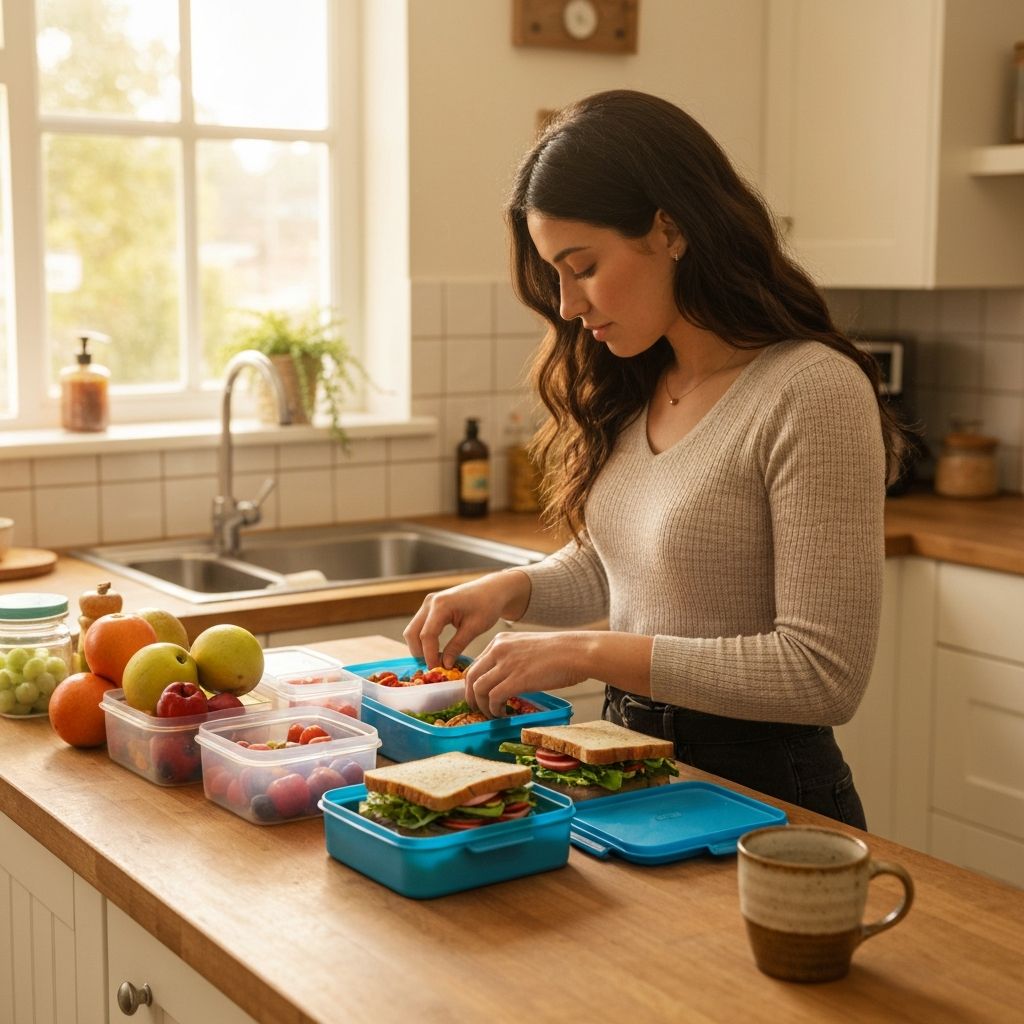
Packing a Lunch
The morning routine. What makes it easier to bring food with you? What do you need in your day to feel sustained?
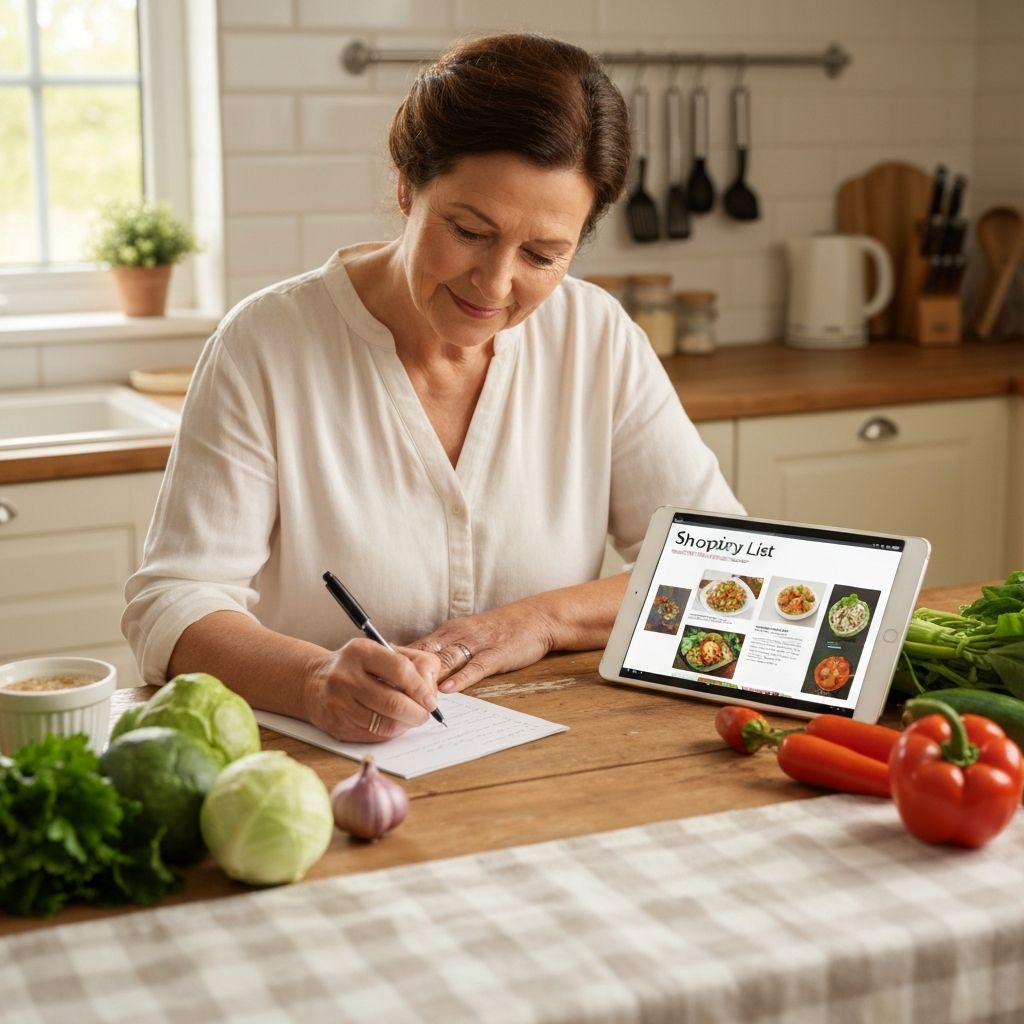
Writing a Shopping List
The planning moment. When you step back and think about the week ahead, what's realistic? What do you know you'll actually eat?
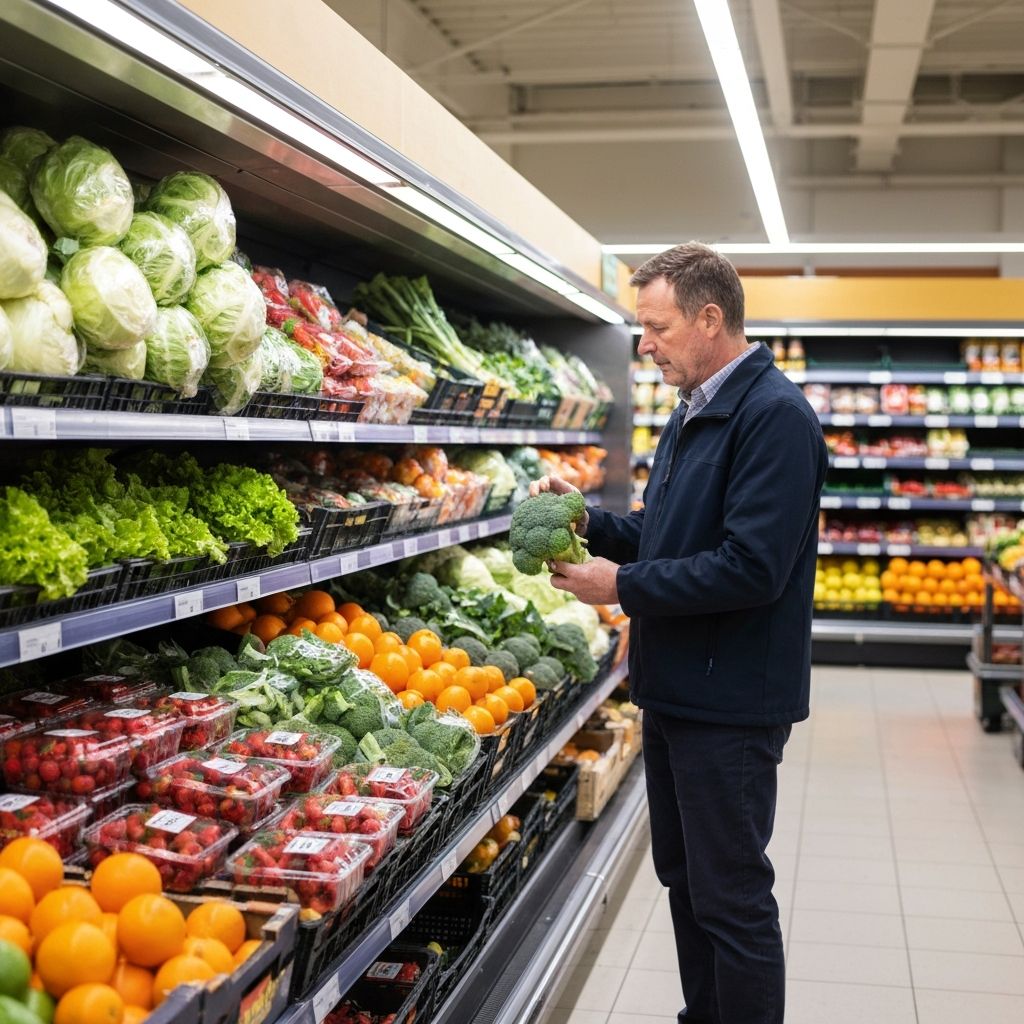
The Supermarket Choice
Standing in the aisle. How do you choose? What feels nourishing and doable? What's on your list for a reason?
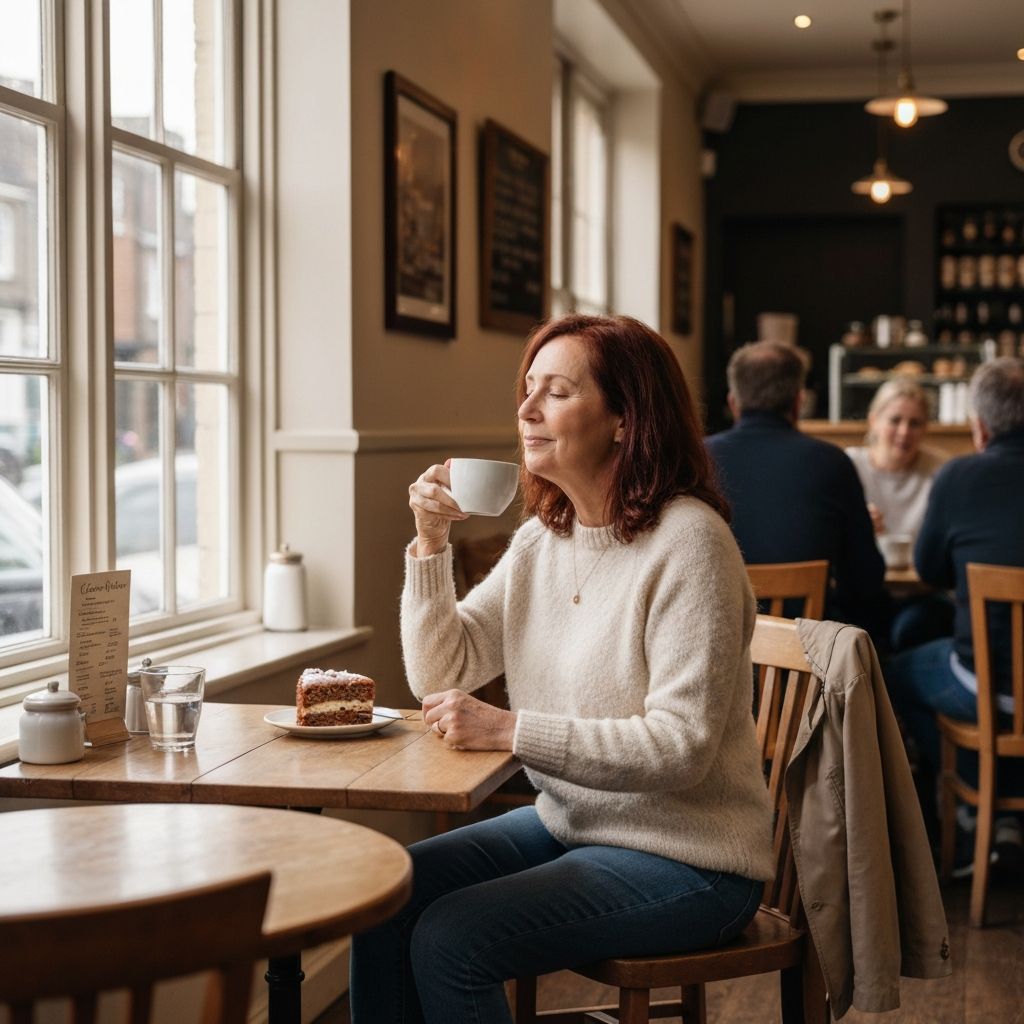
A Lunch Out
The moment of pause. Whether it's a café, work lunch, or a break with friends—how do you choose in the moment?

A Walk After Work
Movement and routine. Not as punishment, but as part of your day. What routines feel good and belong to you?
Defaults: Make the Easier Choice Easier
Small design choices add up. If you make the easier thing also the better thing for you, you'll return to it automatically.
- Stock one reliable breakfast. Something you don't get bored of and that keeps you steady through the morning.
- Know your snack. Have one or two go-to snacks you enjoy and keep accessible. No more "what should I eat" moments.
- Plan one easy dinner. A meal you can make half-asleep that still feels nourishing. Know it by heart.
- Hydration default. Water by your desk, tea in the afternoon—whatever works. Make it automatic, not optional.
- One movement routine. A 10-minute walk, a stretch, something that belongs to your day without effort.
- The five-minute rule. Most cravings pass in five minutes. Pause, drink water, check in. Often you don't actually want it.
Friction Points: Where Plans Tend to Break
Plans rarely fail from big reasons. They unravel at moments of friction—small situations where your routine meets reality and something gives. Here are the common ones:
Meetings and Events
Cakes, biscuits, unexpected catering. You're focused on the meeting, not your plan. What's your approach?
Commuting
The journey to work or home. Convenience shops, vending machines, that café on your route. What can you bring or plan ahead?
Late Afternoons
Around 3–4pm, energy dips. You're reaching for something quick. Is it hunger or fatigue? What could help?
Social Invites
Dinner out, parties, group situations. You're with people you care about. How do you stay grounded while still enjoying?
Understanding your friction points is half the work. Once you know where you usually struggle, you can plan instead of improvise.
Explore moreWeekly Check-In (5 minutes)
Once a week—Sunday evening, Monday morning, whenever—take a moment to review. This isn't data. It's reflection.
The Five Questions
- What felt easiest this week? (Keep doing that.)
- Where did I struggle? (What was the friction point?)
- What would help next week? (One small change.)
- Did I move my body? How did it feel?
- What did I learn about what I actually want to eat?
Write it down. Just for you. No grades, no judgment. Just honesty and progress.
About NiaBuddy
NiaBuddy is a nutrition-focused advisory workbook project. We work in partnership with people through dialogue, adjustment, and steady support—not through prescription or promise.
Our approach is grounded in reality: food isn't moral, routines aren't perfect, and change happens in conversation, not commandment. We believe that sustainable habits come from understanding yourself—your preferences, your friction points, your actual life—and building something around those truths.
We don't make medical claims. We don't promise results. We offer a framework for thinking clearly about your own food choices, and partnership in building routines you can return to without strain or guilt.
This is shared work. It requires honesty, flexibility, and responsibility on both sides.
Explore moreReflection Questions
Take time with these. There's no right answer—just clarity.
- What does "sustainable" actually mean to you? Not what you think it should mean—what would work for your life?
- When have you felt most at ease with food? What was happening then?
- What's one thing you know about your own eating that nobody talks about?
- If you removed the word "should" from food, what would you actually want?
- What support do you actually need (not what you think you need)?
Get in Touch
Questions? Want to share your experience? We'd like to hear from you.
This form is for information and inquiry only. We don't collect data for other purposes.
Contact NiaBuddy
Address:
40 Park Street
Bristol BS1 5HX
United Kingdom
Phone:
+44 117 593 8614
Email:
[email protected]